Suspected termite damage on a deck needs two separate answers. You need to identify the cause, then determine whether structural parts are affected. Don’t approve a cosmetic patch from photos alone.
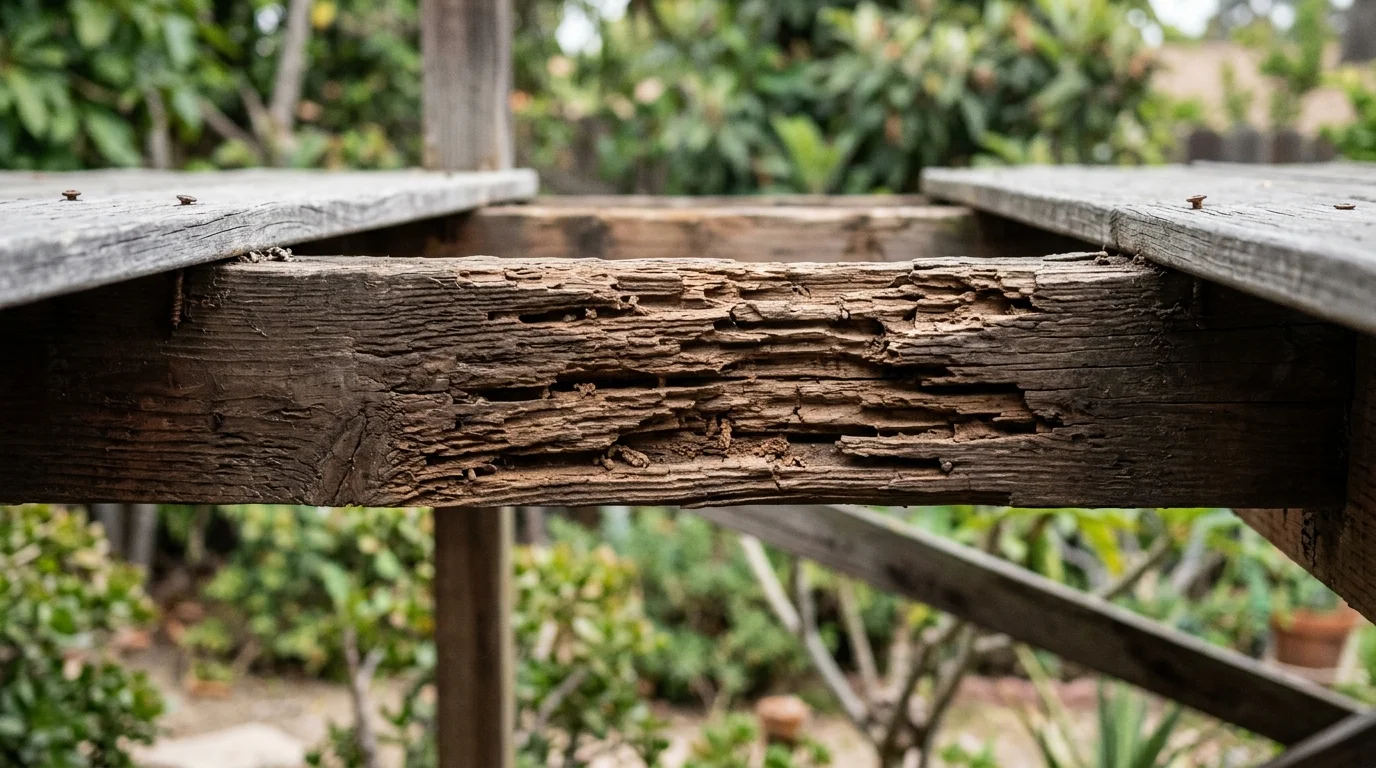
Start with a diagnosis, not a species guess
San Diego homeowners often hear two labels: subterranean termites and drywood termites. Those names don’t tell you what’s happening inside one deck. No published countywide source establishes which type is more likely on a particular property.
The City of San Diego’s permitting information and California contractor resources don’t provide a visual test for homeowners. They also don’t establish a termite type from a photo. Treat either label as unconfirmed until a qualified termite professional documents the evidence.
Ask the inspector to identify the exact location examined. The written findings should distinguish visible insect evidence from damaged wood. They should also name any areas that couldn’t be inspected without removing boards or trim.
Photograph the area before anything gets covered or discarded. Include a wide view showing where the damage sits on the deck. Then take close views of the exposed grain, debris, connections, and nearby surfaces. These photos help the termite professional and deck builder discuss the same location.
Don’t let a regional guess become the repair plan. Ask what was found, where it was found, and what remains uncertain. If the inspector can’t confirm the termite type, keep that uncertainty in writing. The carpentry scope can still address damaged members without pretending the cause was established.
Check these eight locations first
Start with visible areas you can document without opening the structure. Don’t crawl beneath an unstable area or remove structural pieces yourself. Ask the inspecting professional whether the deck should remain in use while the cause and scope are evaluated.
Check these eight locations:
- Post bases. Photograph each post where it meets its support. Include the surrounding grade and any visible connection.
- The ledger. Record visible edges where the deck meets the house. Note any gaps, debris, staining, or missing wood.
- Stair stringers. Check the sides, lower ends, and connections visible from outside the stairs.
- Rim joists. Photograph the outer framing behind the deck-board ends.
- Joist and beam ends. Look at visible bearing points, hangers, and intersections.
- Deck-board ends and cuts. Record damage around fasteners, penetrations, and exposed end grain.
- Wood near soil. Include areas beside planters, mulch, or raised grade.
- Wood beside stucco or irrigation. Photograph tight interfaces and spots reached by direct sprinkler spray.
Write down what you see without naming the cause. Useful observations include holes, loose material, channels, surface loss, debris, staining, or movement. Don’t call debris “frass” unless the inspector confirms that term.
This checklist isn’t a termite diagnosis. It creates a location map for the people evaluating the deck. Mark every photo with the deck side, member, and nearby doorway or stair. That makes later repair discussions much clearer.
Don’t confuse termite evidence with dry rot
Termite damage and suspected dry rot can appear in the same repair conversation. A photograph alone shouldn’t settle that distinction. Even words such as “gallery,” “frass,” “hollow,” and “soft” need a documented location and professional interpretation.
If a report uses “gallery,” ask the writer to identify the channel in a photo. If it uses “frass,” ask which material received that label and why. If someone relies on the sound made by tapping wood, ask what further inspection supports the conclusion.
Keep the questions separate:
- Was insect activity confirmed?
- What evidence supports the stated termite type?
- Was suspected dry rot recorded separately?
- Which boards or framing members show actual material loss?
- Which areas couldn’t be seen during the inspection?
Our guide to deck dry rot and ledger-board repair in San Diego explains why the ledger deserves special attention during a structural review. Don’t assume every discolored board has a ledger problem, though. The repair scope should name the affected member.
A surface board also tells you little about the framing hidden below it. If the visible problem is limited to rough or damaged decking, compare it with the warning signs discussed in our guide to repairing splintering deck boards. Keep cosmetic wear, suspected pests, and structural damage as separate line items.
Match the repair to the damaged member
Don’t set the repair threshold from surface appearance. Ask the deck builder to identify every member proposed for repair or replacement. The scope should name boards, joists, the ledger, posts, post bases, beams, stair stringers, and connections separately.
Targeted deck repairs involving a ledger, joists, or a post base run from $500 to $8,000, depending on scope. A structural repair or rebuild of the affected section runs from $8,000 to $25,000. These are planning ranges, not Deck Pro SD prices. The independent professional sets the quote, contract, and final price.
Most repairs finish in 1-5 days. Structural rebuilds take 1-3 weeks. Hidden damage, access, permitting, and the final repair design can change an individual schedule. Get the project timing from the professional handling the work.
Our deck repair and restoration service covers the difference between targeted work and rebuilding an affected section. A clear proposal should also explain what remains in place. That matters when damage stops at one member rather than extending through the framing.
Like-for-like board replacement usually doesn’t require a permit in San Diego. Replacing structural members often does, especially when loading or configuration changes. The independent crew checks before quoting and pulls the permit when required.
For a property inside the city, confirm current requirements with City of San Diego Development Services. Elsewhere in the county, check with the authority serving that address. Don’t assume one city’s permit answer applies to another jurisdiction.
Keep inspection and carpentry as separate scopes
Treat the termite diagnosis and deck carpentry as separate written scopes. A countywide rule requiring exactly two companies couldn’t be confirmed through the authorities reviewed. Still, one vague proposal shouldn’t blur who identified the cause and who evaluated the framing.
The termite document should state what evidence was observed. It should also identify areas that weren’t accessible. The carpentry proposal should name the members being opened, repaired, replaced, or left in place.
If one company coordinates both parts, ask who prepared each finding. If two companies are involved, give both the same photos and location notes. Don’t rely on a verbal handoff between appointments.
Before hiring the deck builder, verify the contractor through the CSLB license check. The professionals Deck Pro SD connects you with are licensed and insured. Deck Pro SD is a referral service, not the contractor.
We don’t inspect termites, perform treatment, open walls, repair decks, or file permits. We match homeowners with independent local deck builders. The customer contracts with and pays the professional directly.
When structural work requires a permit, the matched crew pulls it in its own name and schedules the inspections. Ask for that responsibility to appear clearly in the repair proposal. Deck Pro SD isn’t a party to the permit.
Build a prevention plan for this deck
No verified countywide clearance dimension or universal borate-treatment rule was confirmed for every San Diego deck. Local conditions and repair details differ. Build the prevention scope around the inspected property, not a generic checklist copied from another region.
Start with four written questions. First, what clearance will remain where wood approaches soil or stucco? Second, where will rain and irrigation water travel after the repair? Third, will any treatment be applied during the rebuild? Fourth, who confirms that each proposed product fits the intended use?
If sprinklers strike the framing, ask the irrigation provider to redirect them. Document the affected area before and after the change. Ask the deck builder to identify any drainage issue included in the carpentry scope.
Borate treatment may come up during a rebuild. Don’t treat it as a blanket San Diego requirement. Request the exact product name, label directions, intended location, and installer’s written scope before approving it.
Use our wood deck service guide to organize questions about replacement materials. The selected professional should connect each recommendation to the exposed structure and documented findings.
Local housing age doesn’t diagnose termite activity. For example, 68.7% of La Mesa homes were built before 1978, according to the U.S. Census Bureau’s 2023 five-year data. That figure doesn’t establish the age or condition of one deck. Homeowners there can review local service coverage on our La Mesa deck builder page.
Finally, ask the termite professional to set any follow-up schedule. No fixed inspection interval for every residential deck is published in a verifiable source. Keep the report, photographs, repair scope, and permit records together.
When to call us
Call when a termite report names damaged deck framing, or opened boards reveal suspected damage at the ledger, joists, posts, or stairs. Deck Pro SD doesn’t inspect or repair decks, but structural deck work calls for a licensed local pro.
Call us at (858) 400-4918, leave a message, and we’ll connect you with a licensed local deck builder.