A deck railing replacement may require a permit in San Diego. The answer depends on the work, the property’s jurisdiction, and how the new guard attaches. Confirm the project with the correct building department before removing the existing railing.
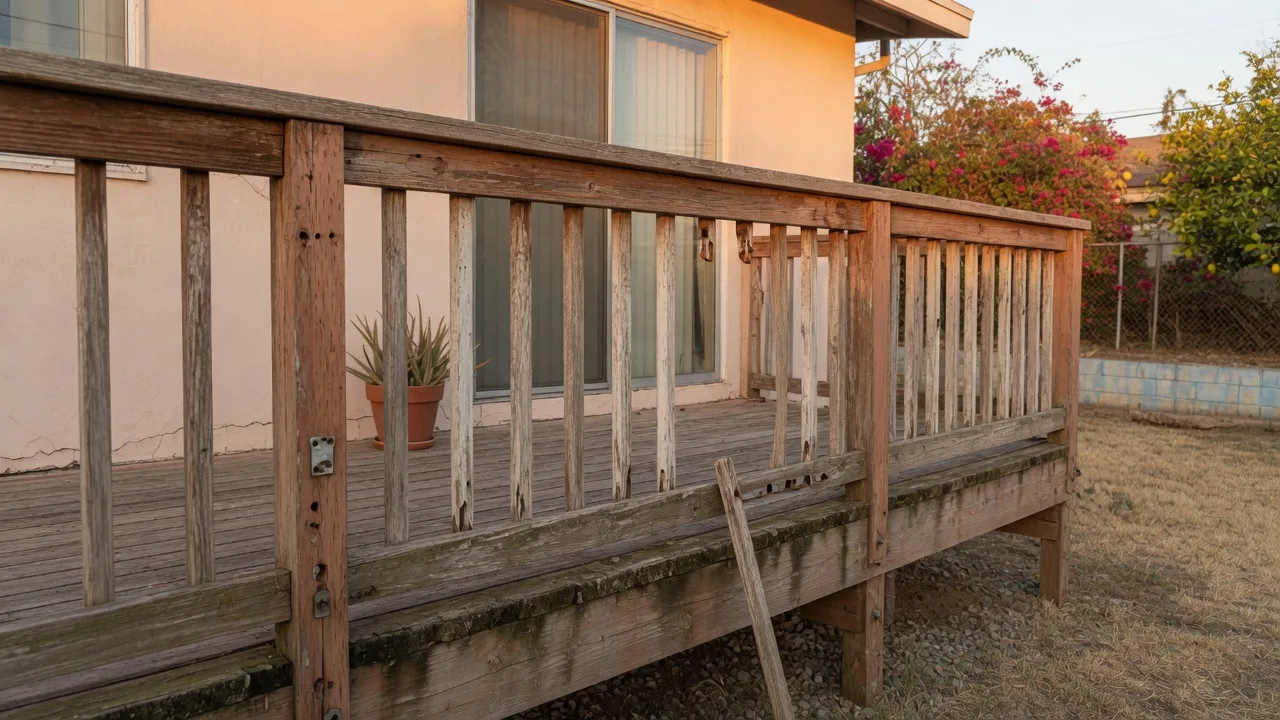
Like-for-like rail swap vs a new guard system
Start by describing the work clearly. “Replacing a railing” can mean several different projects at the permit counter.
One project might replace damaged pieces without changing the layout. Another removes every post, changes the attachment points, or installs a different guard system. A third uncovers damaged framing and expands into structural repair.
The exact San Diego permit treatment for a like-for-like railing replacement couldn’t be confirmed as one countywide rule. Ask the building department responsible for the property. Give them the deck height, the existing rail type, the proposed system, and the parts being removed.
Don’t describe a structural change as a cosmetic update. Posts and their connections help the guard resist force. Moving them or changing how they attach can alter more than the railing’s appearance.
This distinction also separates railing work from simple board replacement. Like-for-like deck board replacement usually doesn’t require a permit in San Diego. Replacing structural members often does, especially when loading or configuration changes. That verified repair guidance doesn’t automatically settle a railing project, but it shows why the full scope matters.
A licensed builder can inspect the existing assembly before finalizing the plan. Our deck railings service connects homeowners with licensed, insured independent pros who handle this work. Deck Pro SD makes the match and doesn’t perform construction.
For a wider look at new decks and larger alterations, see the guide to deck permits in San Diego.
Why height, openings, and attachment matter
The railing material alone doesn’t answer the permit question. Wood, metal, cable, and glass systems can all involve different posts, anchors, brackets, and infill details.
California residential guard rules provide useful design limits. Guards are required along open sides of decks and other walking surfaces located more than 30 inches above the floor or grade below. That measurement applies at any point within 36 inches horizontally from the open edge.
Where a guard is required, it must be at least 42 inches high above the walking surface. Openings can’t allow a 4-inch-diameter sphere to pass through. Stair guards have separate measurements. Their minimum height is 34 inches from the line connecting the tread edges, and their opening limit is 4 3/8 inches.
The top rail and its support system also carry loads. Guards and handrails must resist a 200-pound concentrated load applied in any direction along the top. Infill components must resist a 50-pound horizontal load applied across one square foot.
Those figures explain why attachment details matter. A replacement that changes post spacing, fasteners, blocking, or mounting location may need more review than a finish change. The building department makes the permit decision for the address.
Review the San Diego deck railing code requirements before selecting a system. For fabricated designs, the guide to custom metal handrails in San Diego covers planning questions that should be settled before fabrication.
City of San Diego, other cities, and unincorporated county differ
San Diego County doesn’t have one permit desk for every address. The reviewing authority depends on where the property sits.
Inside the City of San Diego, building permits and plan review are administered by the city’s Development Services Department. Current permit information is available through City of San Diego Development Services.
A mailing address that says “San Diego” doesn’t settle the jurisdiction by itself. If the property is within another incorporated city, ask that city’s building department. Properties in unincorporated San Diego County are reviewed by the county rather than the City of San Diego.
Give the reviewer a narrow, accurate description:
- The property address
- The deck’s height above the surface below
- Whether the existing posts will remain
- Whether post locations or spacing will change
- How the proposed posts will attach
- Whether stairs or handrails are included
- Whether damaged framing will be replaced
Ask for the current determination in writing when possible. Also ask whether plans, inspections, or separate approvals apply. No verified countywide fee or review period is available for this specific railing project. The reviewing agency sets its own current requirements, fees, and process.
This local check matters across the county. A project in Chula Vista isn’t reviewed by the City of San Diego. Neither is work in Oceanside or an unincorporated community. Start with the property’s actual jurisdiction, not the nearest familiar city name.
Our permits and structural service can connect you with an independent local pro when the railing scope involves permitting or structural connections.
HOA approval is a separate check
A building department and an HOA serve different roles. Don’t treat an answer from one as approval from the other.
If the property has an HOA, review its governing documents before ordering materials. Ask the association or its property manager whether railing changes need architectural approval. Get the answer for the proposed design, including its color, material, profile, and visibility.
A city or county permit decision doesn’t confirm HOA approval. An HOA response also doesn’t determine whether the building department requires a permit. Check both paths before work begins.
This matters when an owner wants to replace wood infill with cable, glass, or metal. The new system may change the building’s exterior appearance. It may also use different posts and connections. Keep the design question separate from the structural and permit questions.
Condominiums and other attached multifamily properties can raise added concerns. Don’t assume the deck, balcony, or railing belongs only to the individual unit owner. Confirm ownership and maintenance responsibility through the property’s documents and management before authorizing work.
California’s inspection laws can also apply to certain multifamily buildings. SB 721 covers qualifying exterior elevated elements in buildings with three or more multifamily dwelling units. SB 326 applies to buildings with three or more attached multifamily dwelling units. Deck Pro SD doesn’t perform those statutory inspections. The laws name the professionals qualified to conduct them.
For a rail-only project, the practical order is simple: identify the reviewing jurisdiction, confirm property authority, then settle the system and attachment details.
What a licensed pro submits
There isn’t one verified submittal checklist for every San Diego County railing replacement. The correct packet comes from the city or county reviewing the specific address.
A licensed pro can first define the scope in terms the reviewer can evaluate. That means identifying what remains, what comes out, and how the new guard connects. Existing damage should be included rather than hidden behind a rail-only description.
Ask the building department what drawings and supporting documents it currently requires. Useful details to have ready include dimensions, deck height, post locations, opening sizes, material information, and connection details. The department decides which of those items belong in the formal submission.
Don’t copy a permit checklist from another California county. Don’t rely on a national railing article either. California’s residential guard height is 42 inches, while national content may repeat a different figure used elsewhere.
When a permit is required, the independent crew matched to the job pulls it in its own name and schedules the inspections. Deck Pro SD doesn’t file applications or hold the permit.
Before hiring, homeowners can check a contractor through the Contractors State License Board’s public lookup. The tool shows the license number, status, classification, and bond information. Deck Pro SD itself isn’t a contractor and holds no trade license.
Avoid buying a custom railing system until the connection plan is settled. Changes made after fabrication can affect post locations, panel dimensions, and mounting details.
When railing work becomes a larger repair
Removing an old railing exposes parts that weren’t visible during the first walk-through. A post base may be loose. The rim area may not provide the connection the new system needs. Nearby decking or framing may also need attention.
That discovery changes the scope. Replacing structural members such as joists, beams, posts, or ledger boards often requires a permit in San Diego, especially when the work changes loading or configuration. The building department still makes the decision for the address.
Pause before covering the area with a new post or trim piece. The licensed pro should document what was uncovered and determine whether the planned attachment remains suitable. If the project expands, the permit description may also need to change.
This is one reason accurate early access matters. A surface-mounted metal post and a wood post integrated into the framing don’t create the same connection problem. Cable systems can also place forces on end posts that differ from simple vertical infill. The project should be evaluated as a complete guard system.
Don’t assume a new railing corrects an old deck’s hidden problems. It may improve the visible edge while leaving damaged support below. The permit question and the repair question should be handled together once structural damage appears.
The choice is then larger than style. It becomes a decision about sound framing, compliant guard geometry, and a connection that can carry the required loads.
When to call us
Call when the railing replacement changes posts, attachments, stairs, or exposed framing. We’ll match you with a licensed, insured independent deck builder serving San Diego County.
Call us at (858) 400-4918, leave a message, and we’ll connect you with a licensed local deck builder.