A popped fastener on a Village balcony, or a spongy board above a Muirlands canyon, is the start of the job, not the whole job. La Jolla sits inside the City of San Diego, on bluffs and canyon edges, with salt in the air and a lot of older framing behind stucco. Deck repair here is about what that opening actually shows, and which desk reviews the work.
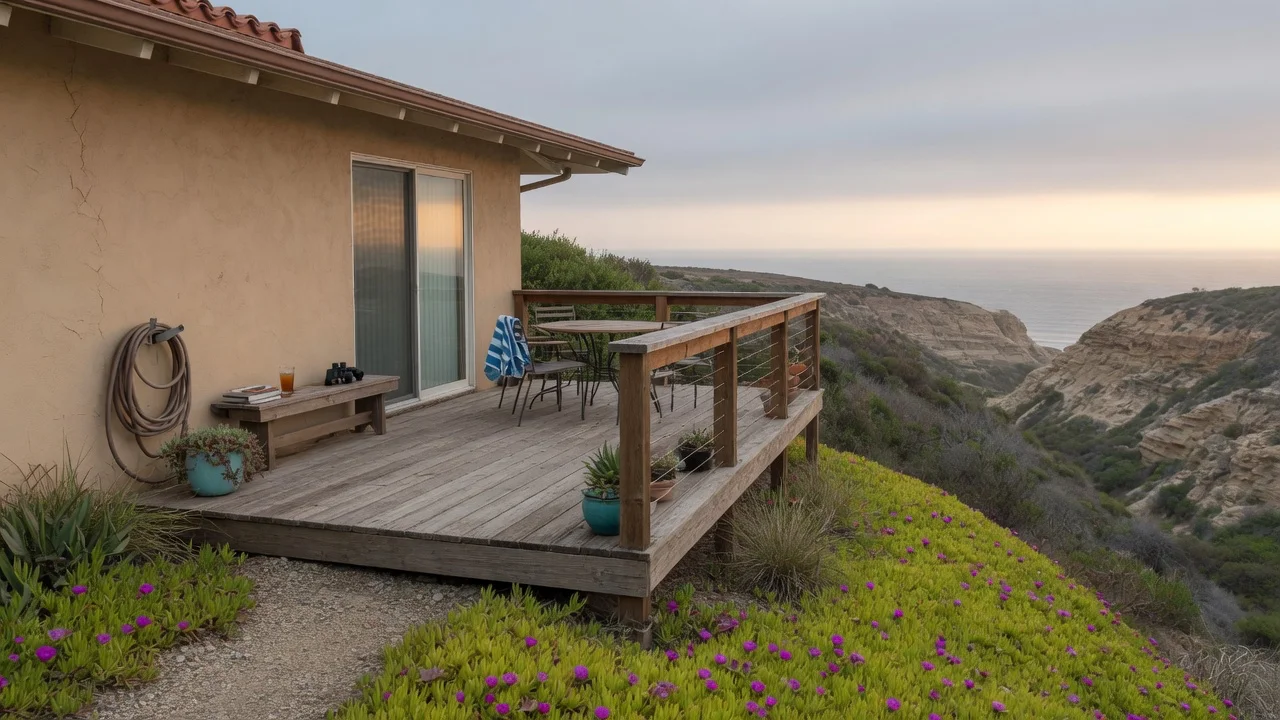
La Jolla is City of San Diego, not its own permit desk, and that changes the path
La Jolla is a community inside the City of San Diego. It is not its own city and it does not run its own building department. Addresses from Bird Rock through the Village and up into the Muirlands go to the same permit desk as the rest of the city.
Building permits and plan review are administered by the City of San Diego Development Services Department. Current permit information is published there. The requirement for a given street is always a question for the jurisdiction reviewing that address. Properties in unincorporated San Diego County are reviewed by the county, not the city. La Jolla is not in that pile.
That split is the first thing a La Jolla deck builder should get right. Search results often treat this shoreline like a small coastal city with its own counter. Del Mar is that kind of city. A Del Mar bluff lot and coating job follows Del Mar’s path. A La Jolla lot follows San Diego’s. Copying the wrong city’s story onto your permit packet wastes a cycle.
Like-for-like board replacement usually does not require a permit in San Diego. Replacing structural members often does. Ledger boards, joists, beams, and posts sit in that second group, especially if the repair changes loading or configuration. The crew checks before quoting and pulls the permit when required.
The independent crew matched to the job pulls that permit in its own name and schedules the inspections. Deck Pro SD pulls no permit, files nothing, and is not a party to it. Writing it that way is the real path. It is not a promise that the brand will stand at the counter.
If the walking surface is a balcony, deck, porch, stair, walkway, or entry that extends beyond the exterior walls, sits more than six feet above grade, and relies on wood, multifamily inspection law may already apply. California Health and Safety Code 17973 (SB 721) requires inspection of those exterior elevated elements on buildings with three or more multifamily dwelling units. California Civil Code 5551 (SB 326) applies to buildings with three or more attached multifamily units, including many condo and HOA stacks. Deck Pro SD does not perform those inspections and does not employ inspectors. It matches property owners with independent licensed professionals. The statutory inspection itself must be performed by one of the qualified professionals the statute names.
Confirm the current path with Development Services before anyone cuts a ledger. A referral page is not the permit desk.
Bird Rock, the Village, and Muirlands lots fail in different ways
Bird Rock sits close to the water. Salt spray and wind hit hardware, rail posts, and the underside of boards. Lots are tight. The deck often lands against the house with little room to hide a failed ledger. A board that looks fine from the street can be soft at the joist. Fastener heads rust first. Then the hanger steel. Then the wood around the steel.
The Village is mixed. Houses, apartments, and shops share the same marine air. A lot of outdoor space here is a balcony or a small rooftop deck over living space, not a backyard platform on grade. Leaks show up as stains on a ceiling, not as a wet patch in the dirt. That is rooftop and balcony deck work. Swapping a few walking boards does not fix a membrane that has opened over a bedroom.
Muirlands and the canyon-side streets above the Village sit on slope. Posts get taller. Connections take more load. Drainage from uphill lots runs toward the frame. Ice plant and irrigation keep the soil wet against post bases. A repair that only swaps the walking surface leaves the tall posts and the hillside hardware in the same condition.
Mount Soledad and the inland-facing canyons add wind and sun without taking the marine layer away. The failure is often mixed. Bleached boards on top. Corroded hangers underneath. A ledger flashed for a drier wall than this one. Coastal deck repair in La Jolla is that mix, not one generic salt-air package.
A pro looking at the job should say which pattern they are seeing. Bird Rock salt. Village waterproofing. Muirlands height and drainage. The quote should follow that.
When people ask whether a handyman can repair a deck, the honest split is scope. A few boards on a low, sound frame is one kind of work. Opening a stucco ledger, replacing joists, or rebuilding a balcony over a room is licensed contractor work. Confirm standing on the Contractors State License Board Check a License lookup before anyone starts. The brand holds no licence and publishes no licence number. The professionals it connects you with are licensed and insured.
Salt, wind, and decks over living space on canyon and bluff edges
La Jolla’s bluff and canyon lots put walking surfaces over air, over rooms, or over both. Wind loads the rail. Salt loads the fasteners. Rain and irrigation sit on coatings that were never detailed for a living-space ceiling below.
A failed coating on a Del Mar bluff lot is a known local pattern. La Jolla has that pattern too, plus more stacked living space in the Village and along the canyons. If water is getting past the membrane, board replacement alone does not fix it. Balcony repair in San Diego is usually a waterproofing question first, and balcony repair in La Jolla even more so.
Guards are required along open sides of walking surfaces more than 30 inches above the floor or grade below, measured at any point within 36 inches horizontally of the edge. In California those guards shall be not less than 42 inches high. That is a California figure. National deck articles often quote 36 inches, which is wrong here. Guard openings cannot pass a 4-inch sphere. On the open sides of stairs the sphere is 4-3/8 inches. Guards and handrails must take a 200-pound concentrated load in any direction at any point along the top. In-fill, balusters, and panel fillers must take 50 pounds on one square foot.
If a railing wobbles on a bluff-edge deck, that is a safety issue, not a cosmetic one. The repair may be new posts, new infill, and new hardware rated for this air. Tightening a screw in a rusty hole does not restore that load path.
Decks over living space also change the inspection conversation on multifamily buildings. Exterior elevated elements include balconies, decks, porches, stairways, walkways, and entry structures that extend beyond the exterior walls, have a walking surface more than six feet above grade, are designed for occupancy or use, and rely in whole or in substantial part on wood. An element the inspector advises poses an immediate threat to occupant safety is an emergency condition. The building owner must perform the required preventive measures immediately. Ask a qualified inspector named in the statute, not a referral page, what a given building still needs.
Handrails belong on each continuous run of treads with four or more risers. Stair risers shall not exceed 7-3/4 inches. Tread depth shall be at least 10 inches. Those figures govern a stair repair on a Muirlands canyon lot the same way they govern a stair anywhere else in the city. The local problem is the salt and the height, not a different stair code.
Older framing and stucco ledgers: what a repair usually opens up
Many La Jolla houses hide the ledger in stucco. The walking surface looks like the whole deck. The connection to the house is the part that fails.
A targeted deck repair and restoration job often starts with a few bad boards. Once those boards come up, the crew is looking at joist ends, hanger steel, and the ledger line. On a stucco wall, flashing that was never installed, or that was buried, shows up as dark wood and soft fasteners. Cutting back to sound wood can grow the opening. That is normal on this coast. It is not a bait-and-switch if the pro shows you what they found before they keep cutting.
Targeted repairs to ledger, joists, or post bases run $500 to $8,000 depending on scope. Full structural repair or rebuild of the affected section runs $8,000 to $25,000. Those are the published ranges for this work in San Diego. They are not a quote for your lot. Height, access on a canyon, waterproofing over a room, and how much framing is gone all move the number. Deck Pro SD sets no prices. The matched pro quotes the job.
Most repairs finish in 1 to 5 days. Structural rebuilds take 1 to 3 weeks. Access on Bird Rock alleys and Muirlands slopes can stretch a schedule. The matched pro sets that with you. The brand does not.
Is it cheaper to repair or replace. Repair is the right call when damage is limited to boards, fasteners, or one section of framing. Replacement starts to win when the ledger, a run of joists, and the posts are all in the same condition, or when the layout itself is the problem. Ask for both paths on paper if the opening is large. Do not decide from the first three boards.
Homeowners insurance is not a deck-repair plan. Wear, salt, and deferred maintenance are often treated as upkeep. Sudden damage from a named event can be a different conversation. Ask your carrier and read the policy. Coverage could not be confirmed as a single rule for La Jolla lots, because the carrier and the policy set it. Do not assume a repair is covered because the deck is attached to the house.
Hardware and materials that survive this stretch of coast
Standard interior-grade screws do not last on this shoreline. Salt air eats them. The stain around a rusty head is a warning, not a patina.
The best decking for coastal salt air in San Diego is a materials question, and La Jolla is the hard version of it. Stainless or other coastal-rated fasteners and connectors belong on repairs here. Hardware that is fine inland is a short-term fix on Bird Rock.
Wood still works when it is detailed for drainage and maintained. Composite and other non-wood walking surfaces cut the sanding cycle. Neither material saves a rotten ledger. Put the money into the frame and the flashing first. The board choice is the layer people see.
Rail infill near the water takes the same beating. Cable, glass, and wood all fail at the posts and the fasteners if those parts were specified for a dry inland lot. Match the metal to the air. A pretty infill on a corroded post is still a failed rail.
Do not treat a manufacturer warranty line as a promise from Deck Pro SD. The brand gives no warranties. Only the matched local pro’s work is warrantied, on that pro’s terms. Only the product maker stands behind its own limited warranty. Read the current document for the board you are buying.
A La Jolla deck builder who has done Village balconies and Muirlands canyon frames will talk about hangers, post bases, and flashing before they talk about stain color. That order is the one that lasts.
Confirm coastal overlay and permit rules with the City of San Diego, never from this page
Coastal review, overlay mapping, and HOA packets change by address. They are not something a referral site can certify for your lot. If a map, fee, or overlay rule is not in front of you from the city, treat it as unconfirmed and ask the desk that actually reviews the street.
Ask City of San Diego Development Services what the current permit path is for your address. If a planning or zoning clearance still applies on a job that needs no building permit, that is their call. A permit exemption is not a zoning exemption. Exemption from a building permit does not authorize work that violates setbacks, height rules, easements, or lot coverage.
HOA rules in the Village and in planned pockets above the canyons are a separate stack. The association can require drawings even when the city does not. The crew you are matched with can prepare what the desk asks for. The association still signs its own approval.
Do not copy a Del Mar, Encinitas, or unincorporated-county story onto a La Jolla address. Those desks are not this desk. Electrical, plumbing, and mechanical work still needs its own permit even where a structure itself is exempt from a building permit. Lighting or a heater on an otherwise small job can bring a permit scope back in.
If the work is structural, plan on a permit conversation before demolition. If the work is like-for-like boards on a sound frame, still have the pro say so in writing. The line between those two is the line that surprises people after the first board comes up.
For licence standing, use the CSLB lookup. Deck Pro SD holds no contractor licence and publishes no licence number. The professionals it connects you with are licensed and insured. That is a claim about the network, not about the brand.
When to call us
Soft boards, a wobbly rail on a bluff or canyon edge, stains on a ceiling under a balcony, or a ledger you cannot see behind stucco are reasons to bring in a licensed deck builder. Call us at (858) 400-4918, leave a message, and we’ll connect you with a licensed local deck builder.