Custom pool decking in San Diego starts with one choice: keep the existing base and resurface it, or replace the affected area and rebuild the finish. Cracks, hollow-sounding areas, lifted edges, heat, drainage, and pool chemistry all belong in that decision.
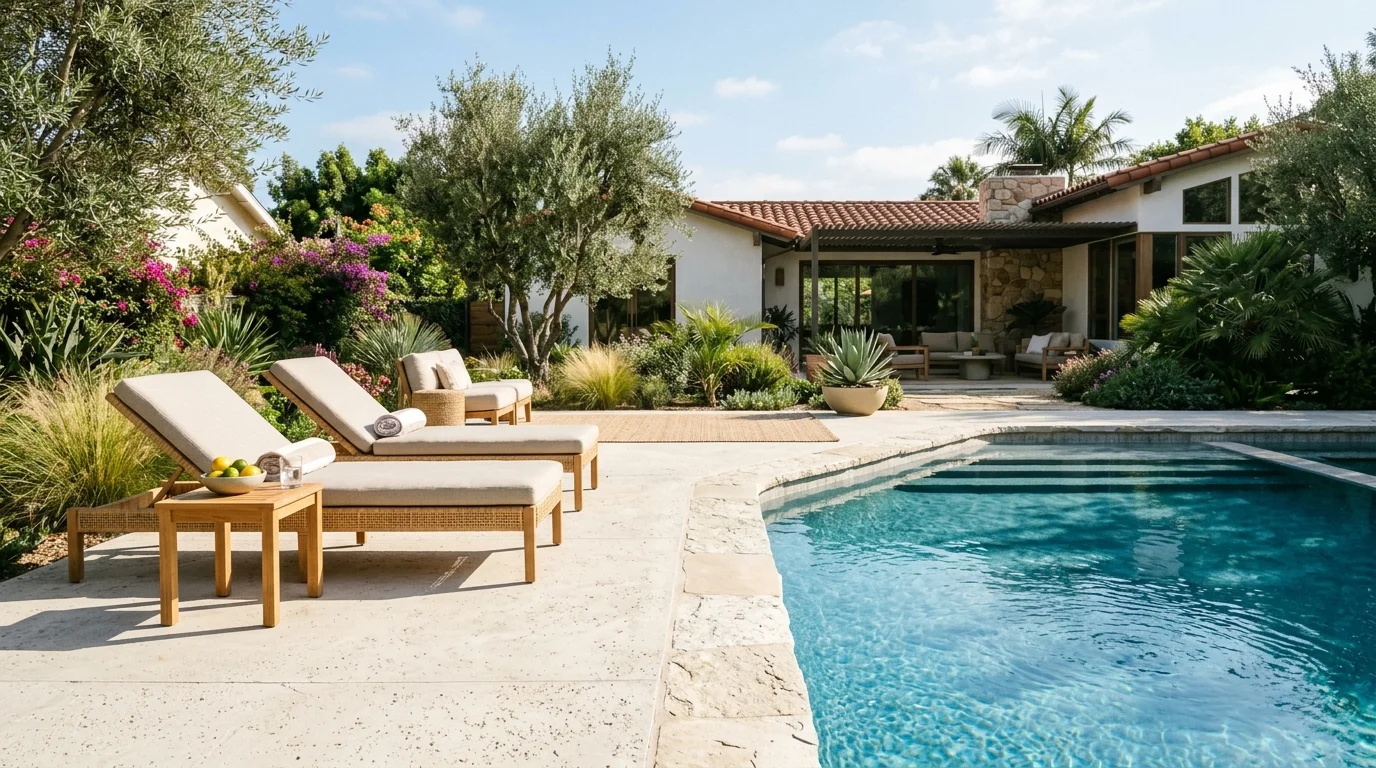
Start with the surface, then question the base
A crack is an observation, not a complete diagnosis. The same applies to a hollow sound beneath a finish or an edge that has lifted. Those signs should be mapped before anyone chooses a color, texture, or coating system.
Published code and county guidance do not establish a crack-width threshold that automatically means resurface or replace. They also don’t provide a verified rule based on the number of hollow spots. A licensed local professional needs to inspect the actual area and define the affected layers.
Ask for a written condition map. It should mark every crack, hollow area, lifted edge, drain, coping joint, step, and transition. Photographs make later scope comparisons easier. The proposal should also explain which existing layers remain and which get removed.
A resurfacing scope should identify the base being retained. It should name the preparation method and exact finish product. A replacement scope should identify the area being removed, the proposed replacement assembly, and its connections to nearby surfaces.
Don’t assume surface work is exempt from every local review. We couldn’t confirm one pool-deck resurfacing permit rule covering all San Diego County jurisdictions. For an address within the City of San Diego, homeowners can check with Development Services. For another city or an unincorporated address, ask the authority responsible for that property.
Our deck resurfacing service page explains how we match homeowners with independent local pros. Deck Pro SD doesn’t inspect, prepare, coat, or rebuild the surface itself.
Compare finishes through written specifications
“Cool deck,” textured coating, overlay, paver, and tile can describe very different proposals. Start by asking each contractor to name the complete system, not just its visible finish.
For a coating or textured overlay, request the manufacturer, product line, preparation instructions, layer schedule, approved base, and maintenance directions. Ask for the published wet-surface test information and any stated limits involving pool chemicals or constant splash exposure.
For pavers, ask how the edge, drains, coping, steps, and nearby doors fit the layout. The written scope should show where cuts and transitions occur. It should also state whether the existing base stays, changes, or gets covered.
For tile, request the exact tile and installation system. Ask for the manufacturer’s wet-area documentation. A showroom label or broad “pool-safe” description doesn’t answer how the entire installed assembly is specified.
No published source establishes one finish as the coolest, least slippery, or longest lasting across San Diego County. Those results shouldn’t be guessed. Compare written product data, actual samples, and the contractor’s proposed installation details.
The broader pool deck options guide can help you organize the choices. For a custom plan, the pool and spa deck service covers matching homeowners with licensed local deck builders.
A homeowner in Vista can also begin with the Vista deck builder referral page. The final specification should still come from the professional evaluating that property.
Treat color as a safety decision
Surface temperature matters where people approach the water without shoes. Still, a color name such as sand, cream, tan, or gray doesn’t prove how hot an installed deck will become.
Published sources do not establish a maximum safe pool-deck temperature. They also don’t verify a universal temperature difference between light and dark finishes in San Diego.
Treat color as a variable to test. Request physical samples of the exact product and color under consideration. Place them at the property where the finished deck will sit. Compare them during the hours when the pool area gets used.
An infrared thermometer can help document differences without touching an unknown surface. Test each sample together under the same conditions. Record the time, location, surface reading, and whether the sample was dry or wet. That small comparison is more useful than comparing unrelated claims from separate brochures.
Ask the contractor how texture and color choices affect the product specification. Get any temperature or reflectance claim in writing from the manufacturer. If a seller uses the word “cool,” request the test method and the exact product covered by that claim.
Color also changes how clearly debris, standing water, edges, and transitions appear. Review the sample beside the coping, house finish, steps, and drain grates. Custom pool decking should work as one visible area, not as an isolated color chip.
Plan drainage before selecting the finish
Drainage belongs in the scope before the decorative finish gets approved. The plan should show where pool splash and rain are intended to travel, whether runoff heads toward the house, and where each drain discharges.
If the plans identify a channel as Deck-O-Drain, ask for the exact existing or replacement product. Record its grate dimensions, outlet path, access points, and connection details. Don’t accept a proposal that simply says “repair drain” without defining what stays and what changes.
The coping joint needs the same attention. Ask the contractor to show how the proposed coating, overlay, paver, or tile stops at that joint. The product manufacturer should provide the treatment details. Don’t assume a decorative layer can bridge a joint or cover a removable grate.
Walk the perimeter with the contractor and mark:
- Doors, walls, steps, and low transitions
- Every grate, channel, inlet, and visible outlet
- The coping line and other existing joints
- Areas where water currently remains after use or rain
- Adjacent planting beds and hardscape boundaries
No published source sets one drainage layout for every San Diego pool deck. The correct route must be documented for the property and checked against the applicable local requirements.
If the pool area connects with an elevated deck or occupied space, read the San Diego waterproof deck coating guide. Ask the matched professional to separate decorative surfacing from any waterproofing scope in the written proposal.
Match the finish to the pool system
“Pool environment” isn’t a complete exposure description. Before selecting a finish, identify the pool’s actual treatment system and the products used around it.
Published sources do not establish one universal effect from chlorine or salt systems on every coating, stone, grout, or fastener. They also don’t support a standard replacement interval. Those answers need to come from the applicable product manufacturer and the professional specifying the installation.
For coatings, request written compatibility with the identified pool treatment and cleaning products. Ask what preparation, curing conditions, cleaning methods, and recoating steps the manufacturer requires.
For stone or tile, request the written care instructions for the exact product. Ask whether a sealer is part of the proposed system, who specifies it, and how that choice changes maintenance.
Fasteners, trim, drains, and metal transitions deserve their own line items. The proposal should name the material or product instead of using broad phrases such as “pool-grade hardware.” Ask for its exposure limitations and maintenance instructions.
Keep these documents with the final contract. If a product claim changes between a brochure, website, and contractor proposal, ask which document controls before approving the material.
The pros we connect homeowners with are licensed and insured. Deck Pro SD itself is a referral service and performs no construction work. Homeowners can also verify a contractor through the CSLB license check before signing.
Build the schedule around the whole pool
Pool deck work affects more than the walking surface. The sequence may involve access, masking, water level, pool equipment, drains, coping, nearby doors, and landscape boundaries. Put each item on the project schedule.
We couldn’t confirm a universal rule requiring every pool to be drained for resurfacing. We also couldn’t verify one shutdown or cure period covering all coating, overlay, paver, and tile systems. Don’t let anyone substitute a generic timeline for the exact product instructions and property scope.
Before work begins, get written answers to these points:
- Whether the water level changes, and who authorizes that change
- Which pool surfaces, fixtures, drains, and equipment get masked
- Whether any equipment gets shut down, and who handles the restart
- How demolition debris and preparation dust are contained
- Which access route the independent crew will use
- What product conditions must be met before each layer proceeds
- When the surface can receive foot traffic and normal pool use
- Who removes masking and checks the finished transitions
Tie each curing requirement to the manufacturer’s current instructions. A calendar date alone isn’t enough if the product documentation also names surface or environmental conditions.
Ask what happens if the exposed base differs from the initial scope. The change process should identify who documents the condition, who approves added work, and whether the material selection needs to change. Deck Pro SD doesn’t set the independent contractor’s schedule, price, or contract terms.
When to call us
Call when the work reaches the base, coping interface, drainage, steps, guards, or a custom layout needing one coordinated scope. We match San Diego County homeowners with licensed, insured independent local pros, but Deck Pro SD doesn’t perform the work or set the contractor’s terms. Call us at (858) 400-4918, leave a message, and we’ll connect you with a licensed local deck builder.