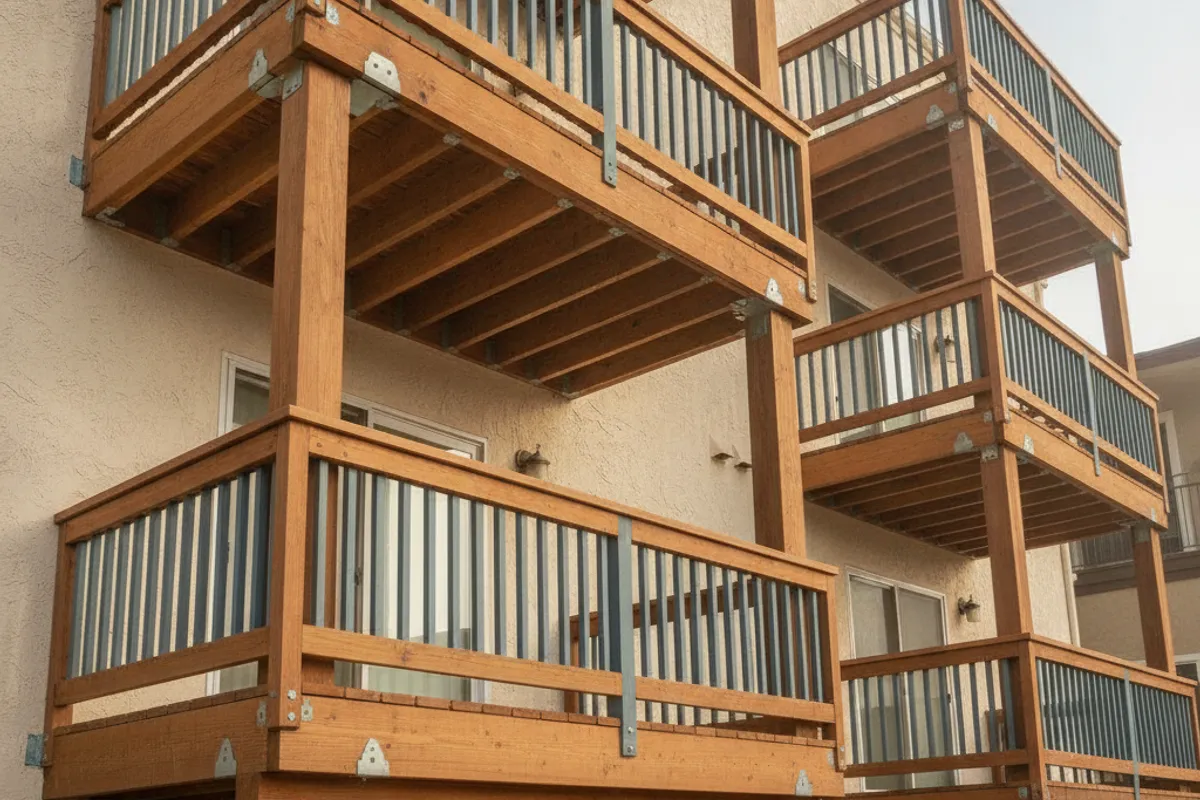
A waterproof deck coating San Diego pros install should match the deck’s substrate, drainage, and what sits below it. Elevated balconies and rooftops over garages, patios, or rooms need a complete waterproofing system. Ground-level exposed wood may only need stain or sealer. The right choice starts with the deck’s structure, not its finish color.
What waterproof deck coating San Diego properties need
Waterproof deck coating and wood stain solve different problems. A stain changes or refreshes exposed wood while adding surface protection. A waterproof system manages water across the entire assembly, including seams, edges, drains, walls, and door transitions.
That distinction matters most when the deck covers usable space. Water passing through a ground-level deck may reach soil or paving. Water passing through an elevated balcony can enter the framing or the space below.
Use the deck’s position to make the first decision:
| Deck condition | Start with | Why |
|---|---|---|
| Ground-level exposed wood | Stain or sealer evaluation | The project centers on the wood surface |
| Elevated plywood or OSB balcony | Waterproof coating system evaluation | Seams, edges, and transitions are part of the assembly |
| Rooftop deck over occupied space | Membrane and walking-surface evaluation | The finished deck sits above a waterproofing layer |
| Concrete balcony | Concrete-compatible system evaluation | Cracks, drainage, and surface preparation affect the selection |
| Soft, loose, or damaged substrate | Structural evaluation before coating | A new surface shouldn’t conceal damaged material |
The San Diego deck staining guide explains the cosmetic wood option. For elevated decks, start with the rooftop and balcony deck service instead.
Compare the main waterproofing systems
There isn’t one coating system for every balcony or rooftop. The substrate, door height, drainage points, existing surface, and planned finish all affect the choice.
Fluid-applied elastomeric systems
A fluid-applied system is installed across a prepared surface. It creates a continuous coating over the deck field and detailed transitions. These systems are often considered for plywood or concrete substrates.
Preparation is a major part of the scope. The proposal should identify repairs, seam treatment, edge details, wall transitions, drains, and the final walking surface. It should also name the exact substrate accepted by the selected system.
Pedestal-set tile over a membrane
Pedestal systems place composite or porcelain tiles above a separate waterproofing membrane. This creates a finished walking surface without bonding every tile directly to the membrane.
Deck Pro SD’s rooftop and balcony service includes pedestal-set composite tile systems. Ask how the proposed assembly handles door clearances, perimeter edges, drainage access, and changes in surface height. These details can determine whether the concept fits the existing deck.
Fully bonded systems
A fully bonded system places the membrane or finished decking against the prepared substrate. Depending on the specified assembly, that may involve a torch-down or self-adhered membrane beneath the walking surface.
The proposal should separate the waterproofing layer from the visible finish. It should also explain how penetrations, drains, walls, and deck edges will be treated. The deck resurfacing service is another starting point when the current surface must be removed or renewed.
Why the substrate changes the answer
Plywood, OSB, and concrete shouldn’t be treated as interchangeable surfaces. Each project needs a system approved for the actual substrate and existing conditions.
On wood-based substrates, the pro should inspect panel seams, fasteners, movement, and soft areas. Concrete evaluation should address cracks, surface preparation, and drainage. Covering an unidentified problem can make the finished surface look better without resolving what lies beneath it.
The best waterproof deck coating San Diego projects can use is the one specified for the complete assembly. A product name alone doesn’t answer that question.
Find coating failure before choosing a finish
Bubbling, cracking, ponding water, lifted edges, and soft spots all deserve closer review. Water staining below the deck also changes the conversation. These signs don’t identify one cause, but they show why surface preparation can’t be treated as a minor line item.
A stain that needs refreshing usually shows its age at the exposed wood surface. A waterproofing problem can involve the coating, membrane, transitions, drainage, or substrate. That wider scope is why an elevated deck needs a system evaluation instead of a color-only decision.
For a Del Mar balcony, the quote should identify details at walls, doors, drains, and edges. It should also explain maintenance under marine-layer moisture cycling, UV exposure, and salt-air exposure. The existing Del Mar deck builder page provides the local service route where coating-related searches have already appeared.
If the inspection finds damaged wood below the surface, read the guide to dry rot and ledger board repair. Coating over a soft substrate doesn’t define the repair scope.
A useful proposal separates five items:
- Removal and disposal of the existing surface
- Substrate inspection and repair
- Drain, wall, door, and edge preparation
- Waterproofing membrane or coating system
- Finished walking surface and maintenance instructions
That breakdown makes competing proposals easier to compare. It also prevents structural repairs from being hidden inside a single coating total.
Price, permits, and multifamily inspections
Deck Pro SD doesn’t set coating prices. The independent professional sets the project price, and the customer contracts and pays that professional directly. Compare proposals by scope, substrate condition, system type, deck size, access, drainage details, and finished surface.
The site’s verified repair ranges apply when damage is found beneath or beside the coating. Targeted ledger, joist, or post-base repairs run from $500 to $8,000, depending on scope. A full structural repair or rebuild of the affected section runs from $8,000 to $25,000.
Those are repair ranges, not coating prices. Most repairs finish in one to five days. Structural rebuilds take one to three weeks. A proposal should keep repair work separate from the new waterproof surface.
Permit questions also depend on the work discovered. Like-for-like board replacement usually doesn’t require a permit in San Diego. Replacing ledger boards, joists, beams, or posts often does, especially when loading or configuration changes. The crew checks before quoting and pulls a permit when required. The permit and structural service covers that part of the project.
Multifamily properties have another layer. California Civil Code 5551 applies to buildings containing three or more attached multifamily dwelling units. It requires a licensed structural or civil engineer, or architect, to inspect load-bearing components and their associated waterproofing systems. The first inspection deadline was January 1, 2025, followed by inspections every nine years.
California Health and Safety Code 17973 covers exterior elevated elements in buildings with three or more multifamily dwelling units. Its first inspection deadline was January 1, 2026, followed by inspections every six years. The California balcony inspection guide explains how SB 721 and SB 326 differ.
Deck Pro SD doesn’t perform those statutory inspections or employ inspectors. We match property owners with independent licensed professionals. For projects elsewhere in the city, the San Diego deck builder page is the main local service hub.
For waterproof deck coating San Diego referrals, call (858) 400-4918. After the recording-consent notice, leave a message describing the deck, substrate, and space below it. Deck Pro SD can use those details to match you with a local independent professional.
Frequently asked questions
Is waterproof deck coating the same as deck stain?
No. Stain is used on exposed wood for appearance and surface protection. Waterproof deck coating is part of a larger assembly that addresses seams, edges, drains, walls, and transitions.
Which waterproofing system is best for a rooftop deck?
The right system depends on the substrate, drainage, door clearance, existing surface, and desired finish. Compare fluid-applied coatings, pedestal-set tile over a membrane, and fully bonded systems against the actual deck conditions.
Can a new coating go over an old deck surface?
Only after the existing surface and substrate have been evaluated. Bubbling, cracks, soft areas, ponding water, or staining below the deck can point to work that must be defined before recoating.
How much does waterproof deck coating cost in San Diego?
The independent professional sets the price based on the project scope. Ask for separate pricing for removal, substrate repair, transition details, the waterproofing system, and the finished walking surface.
Does a waterproofing project require a permit or inspection?
It can when the scope includes structural members or a covered multifamily property. Like-for-like board replacement usually doesn’t require a San Diego permit, while structural changes often do. SB 721 and SB 326 inspections must be performed by professionals named in the applicable law.