For redwood vs cedar decking, the honest answer starts with the boards themselves. A species name alone doesn’t reveal the grade, usable heartwood, finish system, or defects included in a lumber quote. San Diego homeowners should compare those details before choosing either wood.
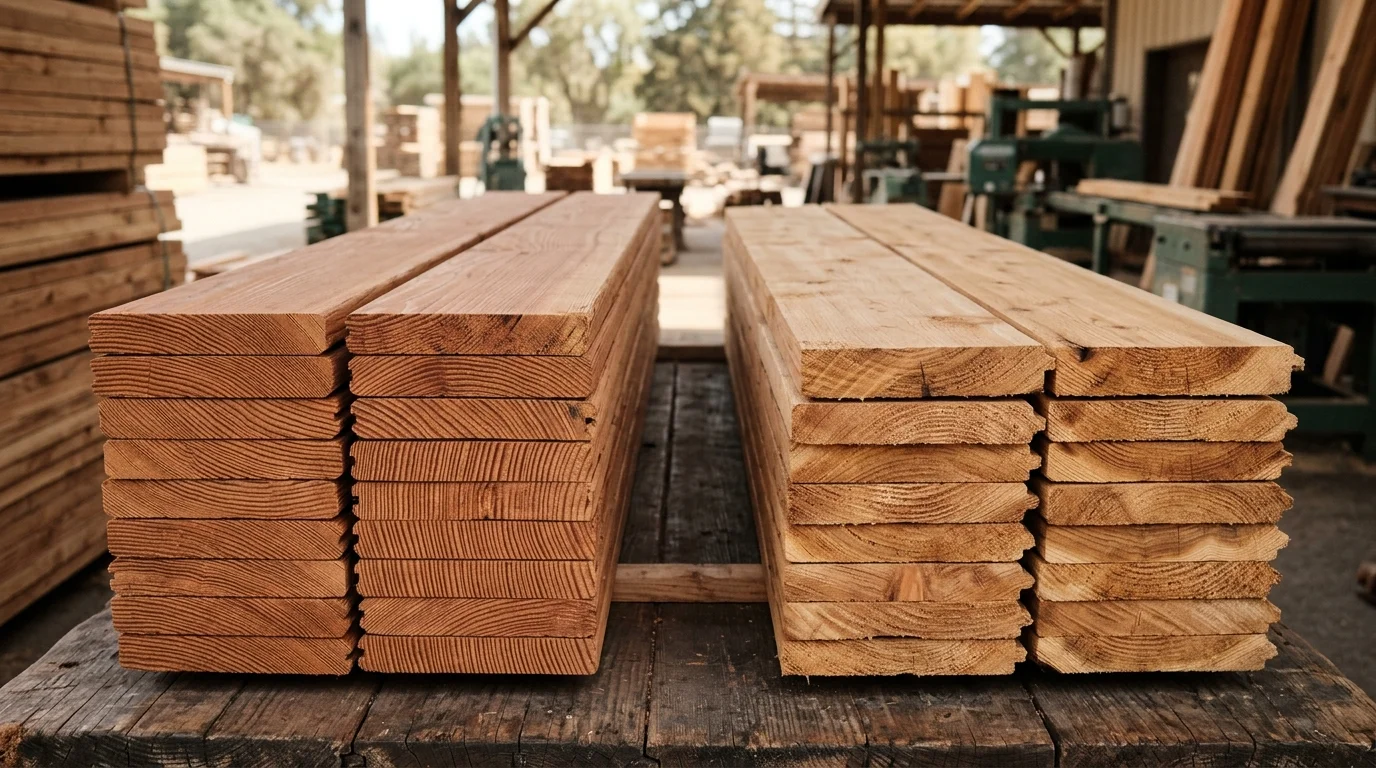
Start with grade, not the species name
Heartwood and sapwood sit at the center of most redwood and cedar comparisons. Sellers often connect those terms with appearance, durability, and price. However, we couldn’t confirm a universal performance ranking from a current manufacturer specification or published grading rule available for this guide.
That gap matters. “Redwood” and “cedar” are broad descriptions, not complete product specifications. Two quotes can name the same species while offering visibly different boards. The written grade, board profile, dimensions, and allowed defects make the comparison useful.
Ask each builder to identify the exact species and grade in writing. The quote should also explain whether the visible face contains heartwood, sapwood, or a mixture. If the supplier uses a proprietary product name, request the manufacturer’s specification sheet.
Bring these questions to the comparison:
- What exact species and grade will arrive?
- Which grading agency or published rule defines that grade?
- Are both quotes using the same board dimensions?
- Which face will remain visible after installation?
- What defects can appear under the quoted grade?
- Can you approve representative boards before installation?
- How will rejected or damaged boards be handled?
These details help prevent an uneven comparison. One quote may cover a more selective board while another allows more variation. The species names won’t expose that difference.
A licensed builder can also explain how the selected surface boards fit the proposed framing. Deck Pro SD connects homeowners with licensed and insured independent professionals for wood deck projects across San Diego County.
Put Construction Heart under the microscope
Construction Heart is a term homeowners may encounter while reviewing redwood quotes. Don’t treat the label as a complete promise about appearance, lifespan, or maintenance. We couldn’t confirm one current, universal definition that covers every supplier and product sold under that wording.
Ask the lumber supplier or builder for the grading rule behind the term. That document should control what the grade permits. A verbal description at the sales counter isn’t a substitute for the written standard attached to the order.
A useful redwood quote identifies more than “Construction Heart.” It names the supplier, species, grade, board dimensions, profile, visible face, and finish plan. It should also say how the builder will address boards that don’t match the order.
Look at full-length samples when possible. A small color chip can’t show grain changes, knots, end checks, or variation across an entire deck. Compare several boards from the proposed product line under daylight. If appearance matters near a prominent patio door, say that before materials are ordered.
Board orientation deserves attention too. Ask which face the builder intends to expose and why. That answer should match the written product guidance rather than an unsupported rule of thumb.
Don’t accept a species upgrade that quietly changes another variable. If one quote uses a different thickness, profile, or grade, ask for a revised comparison. The goal is to isolate what you’re buying. Otherwise, the label can conceal more than it explains.
Judge cedar as an actual board
Cedar is often described with simple adjectives such as light, soft, or easy to damage. Those descriptions shouldn’t decide a deck purchase by themselves. We couldn’t confirm a single current specification that makes those statements true for every cedar species, grade, and board sold locally.
Start by identifying the exact cedar. “Cedar decking” isn’t a detailed material schedule. Ask for the species, grade, dimensions, profile, supplier, and grading authority. Then compare that written schedule with the redwood option.
Handle representative boards from both proposals. Look across the full face and along each edge. Check whether the samples show the color and variation you’d accept across the finished deck. Ask to see the fastener and finish on a sample assembly, not only on loose wood.
The deck’s intended use should guide the discussion. Tell the builder where chairs, planters, grills, and frequent foot traffic will sit. Don’t rely on an unsupported promise that one species won’t dent, split, fade, or weather. Ask what documentation supports the proposed product under those conditions.
Weathering claims need the same discipline. Request the finish manufacturer’s written preparation and maintenance directions for that exact board. Ask how unfinished samples change outdoors, but treat a sample as an illustration rather than a lifespan guarantee.
If you want a darker hardwood option in the comparison, our guide to ipe hardwood decking in San Diego covers another path. Keep the same standard for every material: compare exact products, written specifications, and the complete installation scope.
Match the choice to your San Diego site
San Diego County isn’t one uniform deck environment. A coastal property near Encinitas can present different site observations than an inland home in Escondido. Your own deck location provides better evidence than a countywide slogan.
For a coastal deck that stays damp after fog, document where moisture lingers. Note shaded corners, planters, door thresholds, and areas beneath furniture. Ask each builder how the proposed board, finish, spacing, and fastening plan addresses those observed conditions. Require written product guidance for the answer.
For an inland deck receiving strong afternoon sun, identify the hottest and most exposed areas. Compare finished samples at the property when practical. Ask how the proposed color and finish should be maintained, then check those instructions against the finish manufacturer’s current label.
Elevation, drainage, shade, irrigation, and surrounding construction can change within one neighborhood. That makes the jobsite more useful than a generic claim that cedar belongs near the coast or redwood belongs inland. We couldn’t confirm either blanket rule from an approved primary product source.
Homeowners comparing options for an inland project can start with the deck builder service in Escondido. The independent professional should evaluate the actual site before specifying materials.
Keep structural and surface questions separate. A board choice doesn’t settle the condition of the ledger, joists, beams, posts, or footings. If structural members need replacement, permits often enter the discussion. The matched crew checks the project and pulls any required permit in its own name.
Compare every line in the lumber quote
Deck Pro SD doesn’t set lumber prices or publish an unverified redwood-versus-cedar rate. The independent professional provides the quote, and the customer contracts with that professional directly. Your best comparison is a written, line-by-line scope.
Start with grade and quantity. Then check board length, dimensions, profile, surface treatment, fasteners, finish, delivery, waste handling, and rejected-board policy. If one proposal combines those items into a single line, ask for enough detail to compare it with the other.
Longer boards, special profiles, selective appearance requirements, and waste assumptions may change the quote. We couldn’t confirm a universal adjustment for any of them. The supplier and builder set the actual numbers, so request the current figure in writing.
Ask whether the material allowance covers only deck boards. Framing, stairs, guards, fascia, trim, demolition, disposal, and finishing may sit elsewhere in the proposal. An attractive board number can mislead when the scopes aren’t equal.
The finish system should be named. “Stain included” doesn’t identify the product, preparation, color, number of coats, or areas covered. Ask for those details without assuming one process fits every board.
Confirm who orders the material and who handles shortages or unsuitable boards. Also ask when ownership and payment responsibility transfer. Those are contract questions, not promises made by Deck Pro SD.
Before signing, verify the individual contractor through the California Contractors State License Board. Save the quote, product sheets, finish instructions, and approved changes together. That record gives both sides a clearer description of the deck being purchased.
Compare finishing work with composite
Wood buyers should request a written finish and maintenance plan for the exact board. We couldn’t confirm one universal schedule for all redwood or cedar products. The board supplier, finish manufacturer, exposure, and installed condition determine the applicable instructions.
Ask what preparation happens before the first coating. The proposal should identify the product and areas covered. It should also explain how cut ends, fastener locations, rail components, fascia, and concealed surfaces fit the plan. Don’t assume those details are included.
Next, request the finish manufacturer’s current care instructions. Keep them with the contract. If a seller promises a specific lifespan, maintenance interval, or appearance result, ask for written manufacturer support. Don’t turn a sales statement into an expected warranty.
Composite belongs in the discussion when ongoing wood care feels uncertain. It isn’t enough to compare a wood sample with a composite color chip. Compare complete systems, including framing requirements, fasteners, fascia, stairs, guards, product instructions, and documented maintenance.
Our composite decking service page explains that project path. The composite versus wood guide offers a broader material comparison. Neither choice should rest on an unsupported “maintenance-free” claim.
Appearance still matters. Redwood and cedar buyers often want natural grain and variation. Composite buyers may prefer a more controlled board pattern. View multiple full-length samples outdoors before deciding. Confirm the final product name and color in the contract.
The honest comparison is about ownership, not only installation day. Choose the material whose documented care plan fits your property and expectations. If neither proposal supplies that documentation, ask the builder to obtain it before you approve the order.
When to call us
Call when the material decision touches damaged framing, stairs, guards, or a new deck layout. The independent pro can review the site, document the proposed product and grade, and pull any required permit in the pro’s own name.
Call us at (858) 400-4918, leave a message, and we’ll connect you with a licensed local deck builder.