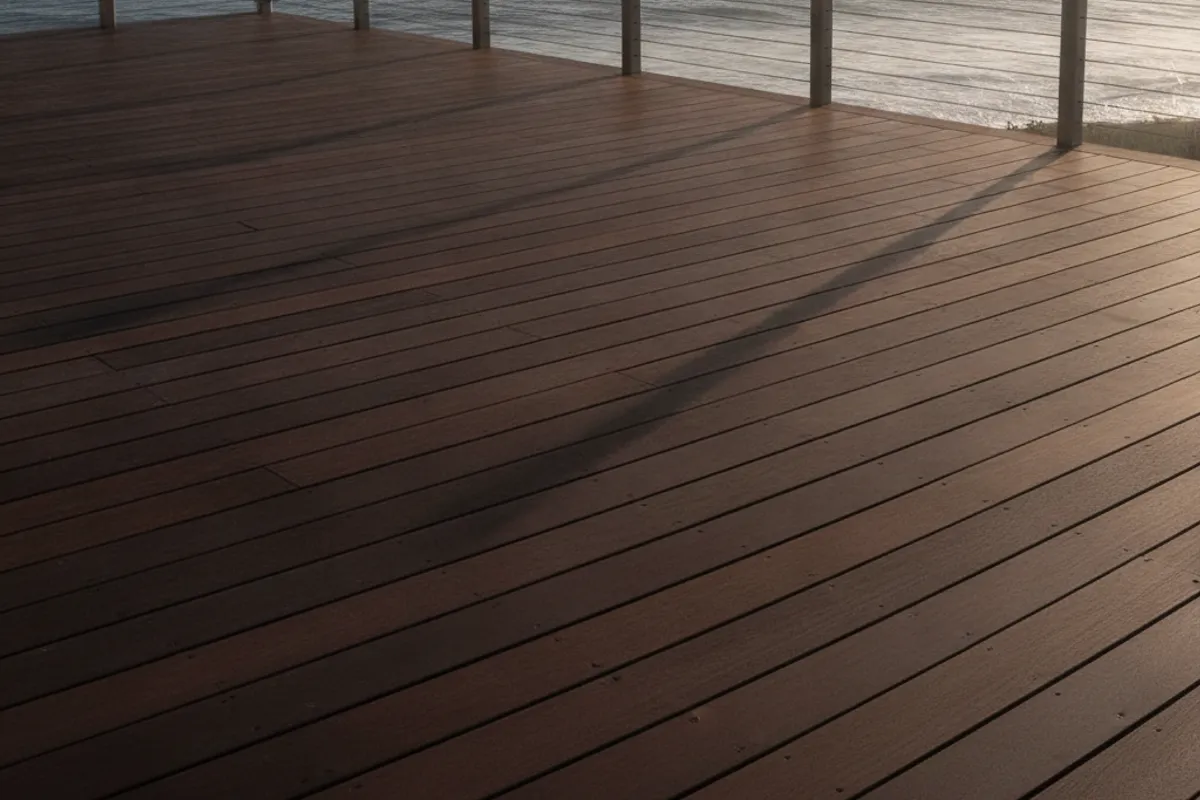
Ipe decking is a dense South American hardwood that stands up exceptionally well to coastal salt air. It’s physically heavy enough that it doesn’t float in water. That extreme density makes it highly resistant to rot and insect damage. It also completely changes how a deck is built. Homeowners comparing quotes often find the labor costs for this material are higher than expected. Every single fastener requires a pre-drilled hole. Understanding how this wood behaves in our local climate helps you decide if it fits your project.
The density factor and deck installation
The defining trait of this tropical hardwood is its tight grain structure. You can’t simply drive a screw through it. Face-screwing a board without pre-drilling splits the wood immediately. The pros we match you with must pre-drill every hole before placing a fastener. This strict requirement slows down the installation process significantly. A crew spends more days on site building this surface than they would with softer woods.
The dense wood also wears down tools quickly. Installers go through saw blades and drill bits at a rapid pace. These consumable costs factor into the final quote you receive. The added labor and tool wear are genuine tradeoffs. You pay more upfront for the durability the material provides over time. The structural integrity is unmatched by local softwoods.
Preparing the substructure for heavy hardwood
Dense hardwood is incredibly heavy. The framing underneath must be perfectly level and structurally sound. The pros we send evaluate your existing joists carefully. Often, an old deck frame isn’t strong enough to support the new weight. They might need to reinforce the substructure before laying the new boards.
Applying joist tape is also a standard practice. It protects the wooden frame from moisture and rot. The top boards will outlast untreated framing lumber by a wide margin. Protecting the frame ensures the whole structure lasts. If the joists rot, the premium surface boards lose their foundation.
Fastening systems for tropical hardwood
Because face-screwing is so labor-intensive, hidden fastener systems are the normal approach. Installers typically use boards manufactured with grooved edges. They slip metal or heavy-duty plastic clips into the grooves. Then they secure those clips directly to the joists below. This method keeps the deck surface smooth and free of visible screw heads.
If you live near the coast, stainless steel fasteners are mandatory. Standard coated screws corrode in the salt air long before the wood itself fails. Towns like Encinitas and Carlsbad get heavy marine moisture. That daily dampness eats through cheap hardware quickly. The crews we connect you with know to specify stainless steel for any coastal project.
Choosing your finish color
The finish decision is the real one you have to make. Left alone, the boards silver to a uniform driftwood grey. Many homeowners prefer this low-maintenance approach. The wood retains its strength even as the color fades.
If you want to keep the rich brown color, the wood needs treatment. You must apply a UV-blocking penetrating oil on a repeating cycle. The intense San Diego sun bakes the oil out of the wood. You’ll need to reapply it regularly to maintain that fresh look.
Neither choice is wrong, but you should choose deliberately. If you let the wood turn grey and later want the brown back, the work is heavy. The crew must sand the entire deck surface to bare wood before oiling it. Starting with a clear plan saves you money and frustration later.
Acclimation and movement
Tropical hardwood moves as humidity levels change. Proper gapping and acclimation before installation matter more here than with manufactured boards. San Diego County has distinct microclimates. The humidity in La Jolla is very different from the dry air in Poway.
When the lumber arrives at your property, it needs time to adjust. A good crew lets the boards sit on site before cutting them. They stack the wood carefully to allow proper airflow. They also leave specific gaps between the boards during installation. This allows the wood to expand and contract without buckling the deck surface.
Our local Santa Ana winds complicate things further. The hot, dry winds pull moisture out of the wood rapidly. If boards aren’t acclimated properly, they can warp or cup. Professional installers understand these local weather patterns and plan accordingly.
Where ipe excels in San Diego and where it struggles
This wood is an excellent choice for coastal properties. It handles the damp, salty marine layer easily. It resists the rot that plagues softer woods near the ocean. You can read more about the best decking for coastal salt air in San Diego to see how it compares.
Inland East County presents a very different challenge. Areas like El Cajon and Santee experience triple-digit heat and full sun. A dark, dense board absorbs and holds that heat. The deck surface gets very hot underfoot. This is a genuine comfort issue if you plan to walk barefoot around a pool. For a west-facing inland deck, a lighter colored material often makes more sense.
If your parcel sits in a designated high fire hazard severity zone, rules change. Your material choices are strictly regulated by local building codes. Check our guide to fire zone deck materials in San Diego for specific compliance details.
Ipe versus capped composite and redwood
Comparing materials honestly means looking at the tradeoffs in both directions. Redwood is a native softwood that’s much lighter and easier to work. It costs less to install because the labor goes faster. However, redwood is softer and requires more maintenance to prevent rot. It also splinters more easily as it ages. You can review our wood decks service page for more on local softwood options.
Capped composite boards offer a different path entirely. They require almost no maintenance beyond washing. They don’t splinter or rot. Yet, composite lacks the natural grain variation of real wood. Like dense tropical hardwoods, older or darker composite boards get uncomfortably hot in direct afternoon sun. The choice depends entirely on whether you value natural aesthetics over a maintenance-free surface.
Responsible sourcing for exotic woods
Because this is a tropical hardwood, sourcing is a real concern. Unregulated logging damages fragile rainforest ecosystems. Forest Stewardship Council certification is the thing to ask a supplier for. An FSC label means the wood was harvested using sustainable practices. These practices protect the surrounding forest and local watersheds.
Be straightforward with your contractor about this requirement. Reputable local suppliers carry certified lumber, but you have to ask for it specifically. It might cost slightly more, but it guarantees your materials were sourced ethically. Keep in mind that certified lumber sometimes carries a longer lead time. You can’t always pick it up the same day from a local yard.
Frequently asked questions
Does ipe require pre-drilling?
Yes, it always does. The wood is so dense that driving a screw directly into it will split the board. Every single fastener hole must be pre-drilled during installation.
Can I let my tropical hardwood deck turn grey?
Yes, you certainly can. If you apply no oil, the wood naturally weathers to a driftwood grey color. This color change doesn’t harm the structural integrity of the boards.
Is this wood good for coastal decks?
It performs exceptionally well near the ocean. The dense grain resists moisture, salt air, and rot better than most native softwoods.
Does the deck get hot in the sun?
Dark, dense woods retain a lot of heat. In sunny inland areas of San Diego, the surface gets uncomfortably hot for bare feet during summer afternoons.
What is FSC certification for decking?
The Forest Stewardship Council certifies wood that is harvested sustainably. Asking for FSC-certified lumber ensures your deck materials come from responsibly managed forests.
Building a custom deck requires careful planning, especially with premium materials. The pros we connect you with know how to handle dense hardwoods. They understand local microclimates and building requirements. Call (858) 400-4918 to discuss your project. We’ll match you with an independent deck builder in San Diego County who can bring your vision to life.