In Borrego Springs, deck planning starts with heat, UV exposure, and shade. A deck builder should turn those concerns into written product and installation requirements. Deck Pro SD matches homeowners with licensed, independent local pros who perform the work.
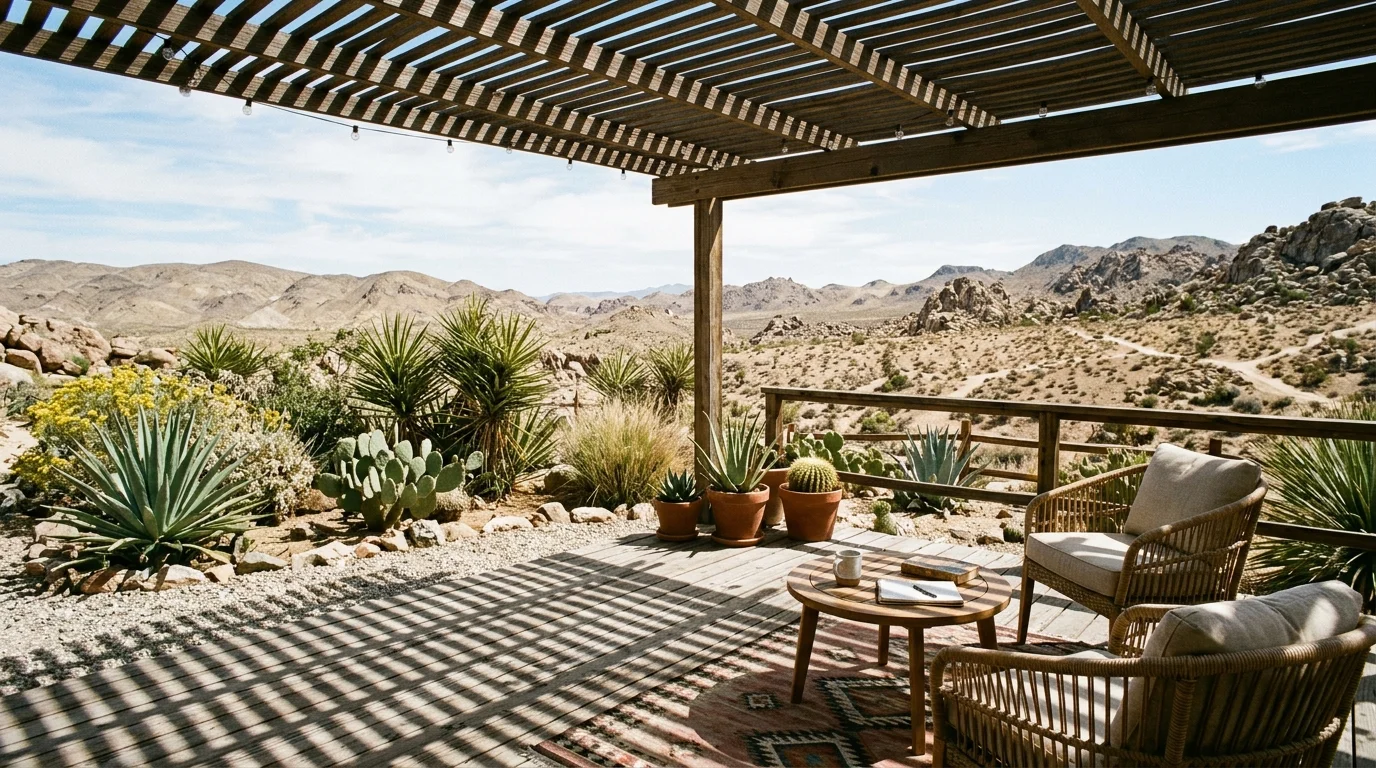
Start with the Borrego Springs property
Borrego Springs sits about 590 feet above sea level. That figure comes from the USGS Elevation Point Query Service, measured at the town center. It’s a sound starting point, but it doesn’t describe every parcel or exposure.
Exact local temperature peaks and annual rainfall couldn’t be confirmed from a primary source. Check current climate normals through NOAA’s National Centers for Environmental Information. Confirm the property’s elevation through the USGS service. Don’t rely on an unsourced number from a sales page.
The site visit still matters. Ask the builder to mark the deck’s orientation and exposed edges. Note walls, windows, paving, existing shade, and nearby structures. Record when people expect to use the space. A breakfast deck and an evening gathering area can require different design discussions.
The builder should also inspect the proposed deck height and connection points. Existing framing, stairs, doors, and drainage paths belong on the plan. These details give the material discussion a real setting.
Avoid specifications copied from another San Diego community. A product selected for a coastal property isn’t automatically the answer in Borrego Springs. Each product claim needs support for the exact board, color, finish, and installation method.
Our Borrego Springs deck builder referral page explains how we connect property owners with licensed local professionals. The independent professional evaluates the site, proposes the scope, and performs the work.
Treat surface temperature as a design decision
Surface temperature belongs in the selection brief, especially for a west-facing deck. Don’t settle for broad claims that one material always feels cooler. Ask for product-specific information tied to the proposed color and board line.
Start with how the deck will be used. Tell the builder whether people will walk barefoot. Identify seating areas, pet routes, stairs, and paths between doors. Mark which parts should remain shaded during the intended use period.
Ask each contractor the same questions:
- Which exact board and color are being proposed?
- What published temperature information does the manufacturer provide?
- How will shade change across the planned deck?
- Can a full-size sample be viewed at the property?
- Does the proposal depend on a future shade project?
A sample placed on site can help compare colors under the same conditions. It won’t prove year-round performance. It can still expose a choice that feels wrong before the full order is placed.
For manufactured boards, review our composite decking service before meeting the builder. Use it to organize questions, not as a substitute for current manufacturer documents.
Color, board choice, orientation, and shade should be reviewed together. Don’t choose the decking first and postpone every comfort decision. The written proposal should identify the selected product and color. It should also state which shade elements are included.
Make every UV claim traceable
UV resistance needs evidence for the exact product line. The same rule applies to finishes, composite caps, fascia, rail components, and shade materials. “Desert rated” means little without a current technical document behind it.
No product lifespan or warranty term is published in a verifiable source. Check the manufacturer’s current written warranty before signing. Match the document to the product name in the proposal. Read its exclusions, maintenance instructions, and registration terms. Don’t rely only on a verbal summary.
Deck Pro SD doesn’t issue product or labor warranties. You contract with the independent professional directly. Product coverage comes from the manufacturer, while labor terms come from the contractor. Get both in writing when they’re offered.
Coastal guidance can still provide a useful comparison. Our article about decking for coastal salt air organizes material questions for shoreline properties. The marine-layer maintenance guide addresses another coastal setting. Neither page should be copied as a Borrego Springs specification.
For wood finishes, request the current technical data sheet. Ask what preparation the finish requires. Confirm its stated exposure limits and recoat instructions. Have the contractor identify who handles future maintenance.
Keep the final product names with the contract. Save the manufacturer documents used during selection. If a substitution appears later, repeat the same review. Similar-looking boards can carry different instructions and written terms.
Put fastening and gapping in the proposal
If wood movement concerns you, make it part of the written installation plan. There isn’t one confirmed spacing or fastening schedule for every board and property. The answer should follow the selected material, its current instructions, and the approved project plan.
Ask the builder to name the wood species and board dimensions. Request the proposed gap, fastener, and fastening pattern. Ask how those choices follow the supplier or manufacturer instructions. General phrases such as “standard spacing” don’t explain the actual installation.
The same discipline applies to composite products. Have the contractor identify the board line, fastener system, and required clearances. If a hidden-fastener system is proposed, its product name should appear in the scope. Any alternative should be reviewed before installation.
Existing decks need a separate structural discussion. A flat replacement board doesn’t prove that the framing below is sound. Ask the professional to identify which components are being retained, repaired, or replaced.
Like-for-like board replacement usually doesn’t require a permit in San Diego. Replacing ledger boards, joists, beams, or posts often does, especially when loading or configuration changes. The crew checks before quoting and pulls the permit when required.
Deck Pro SD doesn’t file permits. When a permit is required, the independent crew matched to the project pulls it in its own name and schedules inspections. Ask for the permit scope and approved plans before structural work begins.
Design shade before choosing the boards
Shade shouldn’t be treated as a decoration added after construction. Include it while reviewing the deck’s orientation, surface choices, seating, and access. That keeps posts, footings, stairs, and usable space in one design conversation.
Possible concepts include an open pergola, a slatted cover, or a louvered roof. Their suitability isn’t confirmed by the label alone. Ask the builder to show the proposed dimensions, post locations, roof treatment, controls, and drainage details.
Our pergolas and shade structures service can help frame that discussion. Bring the shade scope into the same proposal as the deck whenever the two structures connect.
California Residential Code Section 105.2 exempts one-story detached accessory structures when their floor area doesn’t exceed 120 square feet. Whether an open-roof pergola counts as a similar exempt use is decided locally. Published San Diego County guidance confirming its application to Borrego Springs couldn’t be verified.
Ask the building authority governing the parcel for a written determination. A permit exemption doesn’t override zoning, setbacks, easements, height limits, or lot-coverage rules. Electrical, plumbing, and mechanical work requires separate permitting even when the structure itself is exempt.
If a permit is required, the independent crew matched to the project pulls it. Deck Pro SD files nothing. Don’t authorize construction based on a general exemption found online. Confirm the ruling for the actual parcel and proposed structure.
Plan for the house, access, and schedule
Housing age gives context, but it doesn’t diagnose a deck. U.S. Census Bureau ACS 2023 table B25034 shows that 37.2% of Borrego Springs homes were built before 1978. That’s below the 48.1% median among San Diego County places with place-level data.
The construction date of the specific home still needs confirmation. Check property records and any available plans. Ask the builder to inspect existing connections rather than inferring their condition from neighborhood age.
Access also needs a property-specific plan. Don’t assume a delivery vehicle can reach the work area. Record gates, driveways, turns, overhead limits, slopes, and staging space. Ask where boards will be stored and how debris will leave the property.
Have the contractor confirm delivery requirements with the supplier. The proposal should identify who receives materials and handles damaged items. If a product has storage instructions, those instructions should remain with the project documents.
Seasonal scheduling should be confirmed by the contractor and suppliers. No Borrego Springs response time, delivery period, or construction duration is published in a verifiable source. Ask for the proposed sequence, material availability, and dependencies in writing. Treat every date as the contractor’s commitment, not a promise from Deck Pro SD.
The professionals we connect you with are licensed and insured. Before contracting, check the professional’s record through the California Contractors State License Board. Make sure the name and license information match the proposal you received.
When to call us
Call when heat exposure, shade, structural repair, or permit scope needs a licensed deck builder’s judgment. The line plays a recording-consent notice before recording and transcribing your message. Call us at (858) 400-4918, leave a message, and we’ll connect you with a licensed local deck builder.